
level 12
“PLEASE don’t leave us.” From the dozens of e-mails in people’s inboxes, begging them to give their consent to be sent further messages, you could deduce that the senders of newsletters and the like are hardest hit by the European Union’s tough new privacy law, the General Data Protection Regulation (GDPR), which goes into effect(句型) on May 25th. But the main loser may well be an industry that few have ever heard of but most have dealings with every day: advertising technology, or ad tech. In fact, the GDPR would probably not exist at all were it not(If倒装) for this collection of companies, which have an insatiable hunger for(词汇) personal data.“请不要离开我们。”人们的收件箱收到数十封这样的电子邮件,请求他们同意继续接收信息。你可能会由此推断,在5月25日欧盟严格保护隐私的新法律《通用数据保护条例》(GDPR)生效后,受打击最重的是这类发送营销内容的企业。然而,主要的输家很可能是一个少有人听说、但大多数人每天都在接触的行业:广告技术。事实上,要不是因为这个对个人数据贪得无厌的行业的存在,GDPR条例可能根本就不会出台。
N-UNCOUNT If you give your consent to something, you give someone permission to do it.
V-T If you deduce something or deduce that something is true, you reach that conclusion because of other things that you know to be true.
2018年06月07日 13点06分
2
level 12
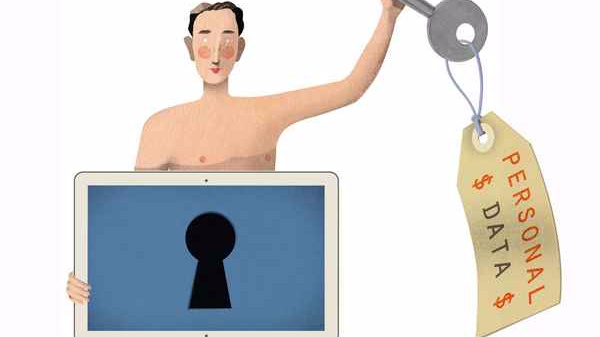
The GDPR will speed up the process by, in effect, assigning a value to personal data. Under a realistic reading of the GDPR, most ad-tech firms will need consent from individuals to process their data. This will be hard, since most have no direct relationship with consumers. And even if they do, people are unlikely to approve being tracked across the web; only 3% would opt in, according to Johnny Ryan of PageFair, an ad-tech firm critical of the industry.GDPR条例实际上是为个人数据赋予了价值,将加速这一整合过程。一种对GDPR条例比较现实的解读是,大多数广告技术公司未来将需要征得个人同意才能使用他们的数据。这会很难,因为这些公司大多与消费者并无直接关系。即使有,人们也不太可能同意自己在网上被跟踪。约翰尼·莱恩(Johnny Ryan)在对该行业持批评态度的广告技术公司PageFair任职,他说只有3%的人会给予这样的许可。
Reactions to GDPR have varied. Some ad-tech companies have pulled out of Europe. Others think they can get away with claiming “legitimate interest”, which is another legal basis for processing personal data allowed by the GDPR—an optimistic interpretation, and one that is likely to become obsolete with the ePrivacy directive, another privacy law the EU is working on. For its part, the European arm of the Interactive Advertising Bureau, a lobbying group, has released technical standards to ensure that an individual’s consent or the lack thereof is communicated across the advertising supply chain.业界对GDPR条例的反应各有不同。一些广告技术公司已退出欧洲市场,另一些认为它们可以借“合法利益”的名义侥幸过关。“合法利益”是GDPR允许使用个人数据的另一个法律基础——一种对条例的乐观解读,并且可能会随着欧盟正在修订的另一部隐私法《电子隐私指令》的实施而失效。在业内,游说团体美国互动广告局(Interactive Advertising Bureau)的欧洲分部已经发布了技术标准,确保整个广告供应链都能知晓是否获得了某个人的许可。
Another tack is to try and use the GDPR to improve companies’ position in the market. Google has told all the websites and apps that use its ad-tech tools that they must get people’s consent. It also says that if they use its consent tool, they must limit their use of other ad-tech vendors. That has publishers up in arms. They worry it will make Google an even more dominant force in the online advertising market. Instead, they harbour hopes that the GDPR will end up helping them. The rise of ad tech meant that advertisers no longer targeted websites and apps, but people. If the law makes individual targeting more difficult, publishers will regain some control of customer relationships, says Jason Kint of Digital Content Next, a publisher group.另一种做法是尝试利用GDPR条例来改善企业的市场地位。谷歌已经告知所有使用其广告技术工具的网站和应用必须获得人们的个人数据使用许可。它还表示,如果它们使用谷歌的许可工具,就必须限制使用其他广告技术供应商。这让出版商们很恼火,担心这会进一步加强谷歌在网络广告市场的主导地位。它们反而暗暗希望GDPR条例最终能帮到它们。广告技术的崛起意味着广告主瞄准的不再是网站和应用,而是人。出版集团未来数字内容公司(Digital Content Next)的詹森·金特(Jason Kint)说,如果法律让精准定向广告变得更难开展,出版商将重新获得一些对客户关系的控制权。
Early signs suggest that the ad-tech industry may indeed be turning away from individually targeting people, and not only in Europe. Google, for instance, has said it will offer ads that are less targeted at particular individuals. A group of media companies has launched TrustX, a non-profit ad exchange which does not allow people’s data to be shared by lots of other firms. If the GDPR strengthens this trend, consumers will breathe easier online—and not just because their inboxes will be emptier.早期迹象表明,广告技术行业可能确实正在放弃定向广告,而且不仅仅是在欧洲。例如谷歌已表示未来将减少提供针对特定个人的广告。一批媒体公司已经推出了非盈利广告交易平台TrustX,该平台不允许个人数据被分享给其他众多公司。如果GDPR条例强化了这一趋势,消费者在网上将能松一口气——不仅仅是因为他们的收件箱不会那么满了。
2018年06月07日 13点06分
4

![[真棒]](/static/emoticons/u771fu68d2.png)