
level 12
贴吧用户_0MK1VWV
楼主
中国经济
消失魔术
中国经常账户盈余消失将改变全球经济
China’s economy
Disappearing trick
The demise of China’s current-account surplus will change the global economy
NOT long ago China was a leading culprit in global economic imbalances. Whether blame was ascribed to its undervalued yuan or its frugal people, the problem seemed clear. China was selling a lot abroad and buying too little back. One data-point summed this up: its current-account surplus reached 10% of GDP in 2007, well above the level that is generally seen as reasonable. Far less attention has been paid to its steady decline since then. In the first quarter of 2018 China ran a current-account deficit, its first since joining the World Trade Organisation in 2001. Just as its massive surpluses of yore had big consequences for the global economy, so does this swing in the opposite direction.不久以前中国是全球经济失衡的罪魁祸首。无论人们是将问题归咎于人民币被低估还是其国民节俭成性,问题本身似乎一目了然:中国出口多,进口太少。一个数据点概括地反映了这一点:2007年,中国的经常帐户盈余占到GDP的10%,远高于一般认为的合理水平。但是,实际上自此以后这一盈余不断减少,而这种变化却远不为人所注意。2018年第一季度,中国的经常账户出现了赤字,是2001年中国加入世贸组织以来的头一回。正如之前其巨额盈余对全球经济产生了重大的影响,此次逆转也一样。
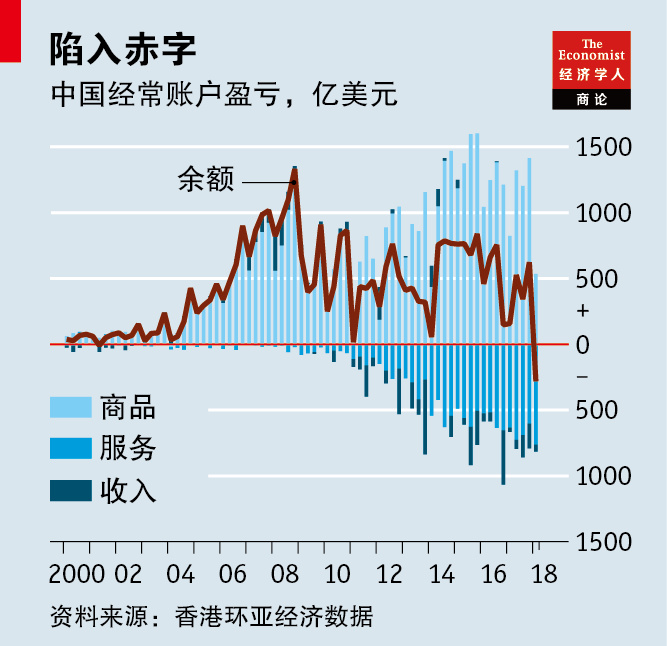
China still exports many more goods than it imports, to the tune of nearly $500bn annually. But its share of global exports appears to have peaked. At the same time its trade deficit in services is getting bigger, largely thanks to all its tourists venturing abroad (see chart).中国的商品出口仍远超进口,每年顺差近5000亿美元。但它在全球出口中所占的比例似乎已经见顶。与此同时,其服务业贸易逆差扩大,主要是受中国游客的出国游热潮带动(见图表)。
2018年05月29日 10点05分
1
消失魔术
中国经常账户盈余消失将改变全球经济
China’s economy
Disappearing trick
The demise of China’s current-account surplus will change the global economy
NOT long ago China was a leading culprit in global economic imbalances. Whether blame was ascribed to its undervalued yuan or its frugal people, the problem seemed clear. China was selling a lot abroad and buying too little back. One data-point summed this up: its current-account surplus reached 10% of GDP in 2007, well above the level that is generally seen as reasonable. Far less attention has been paid to its steady decline since then. In the first quarter of 2018 China ran a current-account deficit, its first since joining the World Trade Organisation in 2001. Just as its massive surpluses of yore had big consequences for the global economy, so does this swing in the opposite direction.不久以前中国是全球经济失衡的罪魁祸首。无论人们是将问题归咎于人民币被低估还是其国民节俭成性,问题本身似乎一目了然:中国出口多,进口太少。一个数据点概括地反映了这一点:2007年,中国的经常帐户盈余占到GDP的10%,远高于一般认为的合理水平。但是,实际上自此以后这一盈余不断减少,而这种变化却远不为人所注意。2018年第一季度,中国的经常账户出现了赤字,是2001年中国加入世贸组织以来的头一回。正如之前其巨额盈余对全球经济产生了重大的影响,此次逆转也一样。
China still exports many more goods than it imports, to the tune of nearly $500bn annually. But its share of global exports appears to have peaked. At the same time its trade deficit in services is getting bigger, largely thanks to all its tourists venturing abroad (see chart).中国的商品出口仍远超进口,每年顺差近5000亿美元。但它在全球出口中所占的比例似乎已经见顶。与此同时,其服务业贸易逆差扩大,主要是受中国游客的出国游热潮带动(见图表)。