
level 13
建宁太子
楼主
Elon Musk’s SpaceX has managed to pull off the stunning feat of shooting aboard the most powerful rocket on Earth. But it’s just the beginning.
The mission is a test of a rocket that could come to define the coming decades. And the battle to make that happen – to become the defining and most efficient way of carrying things and people into our solar system – could be the beginning of a new space race.
For now, the world is incredibly excited by the successful launch of the rocket. In a test that SpaceX founder Elon Musk suggested could just become the greatest firework show ever seen if it went wrong, the rocket actually managed to lift off, with all of the mission going entirely to plan.
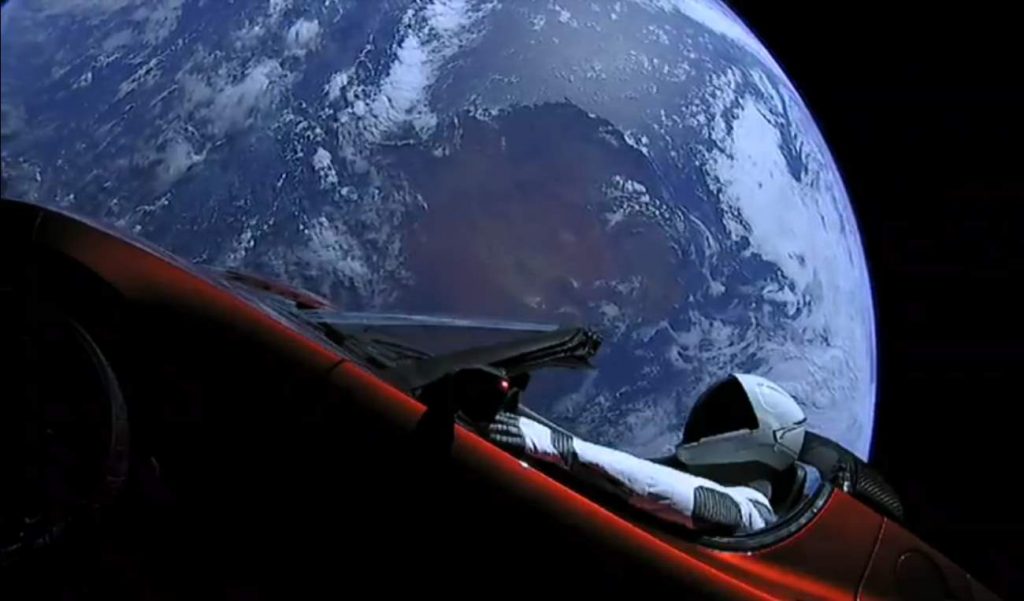
Elon Musk tweets video of the view from the car Falcon Heavy took into space
But part of the excitement is the strange feeling of living in science fiction that it provoked. Watching livestreams of an electric car floating in space, while the boosters that carried it there softly land themselves back on Earth, it’s hard not to feel that we’re living in the future.
The ways that the mission and the rocket at the centre of it are used will come to define our future, too. It is the beginning of the most important market in the universe, and some of the most spectacular trips ever seen; we are going to leave the Earth and explore the planets of our solar system, it seems, and a Tesla car and the dummy inside it have had a taste of that future.
Why is there all this excitement?
Partly, it’s natural. The rocket is tremendously powerful. That’s not just important in itself: it’s also a marker of the fact that the US is moving back to pulling its weight in terms of rockets, and a reminder that variations on this kit could eventually be used to take people to the moon and Mars.
The rocket is a tremendous piece of work, by the researchers at SpaceX. It’s not the most powerful rocket ever made, and Nasa’s Space Launch System will beat it when it finally launches. But it runs very cheaply, for a rocket; the fact that it can be re-used, at relatively little expense, could launch an exciting future of much more regular space launches.
But ultimately none of this explains everything. What does is that SpaceX is owned by Elon Musk, a man who has cultivated a whole brand around his commitment to sometimes important, often overblown new projects.
The installation of Mr Musk’s own car in the rocket is a sign of the real reason this launch is such a big deal: it is being done by a man with a flair for a story, and the desire to make people talk about him and what he’s doing. There’s no reason for the car to be going to space apart from as a talking point – indeed, the rocket could carry some important scientific instruments instead – but when viewed as a publicity stunt for a private space company that hopes to be the future of corporate space travel, everything makes a little more sense.
Why did SpaceX send the rocket up, not Nasa?
There has been a gradual move, in recent years, to allow private companies to take on more of the hard work of space travel. Much of that is still co-ordinated by Nasa – it decides which US astronauts to send up, and prepares them – but the actual lifting is done by private companies like SpaceX.
The idea behind that plan is that it makes such missions much cheaper, since private companies can develop and build the rockets and allow the US government simply to borrow them. The firms can then supplement their income with other private satellite launches and other work, cutting down the cost of space travel.
So SpaceX’s latest mission is just the natural consequence of that. A very powerful rocket will be needed if we want the power to get people back to the moon or onto Mars; that will need to be re-usable if we want to do it without spending too much money.
Where is all this leading?
Into space, in some form. But who will get to follow it there, on whose orders, and where – those are all still up for debate.
The US government and Nasa, for instance, definitely want to head to Mars. They’ll likely do that by heading to the moon first, in part because we can then use that as a stop-off on our way to the Red Planet. SpaceX – or some other company – is likely to build the rocket to carry them there, though Nasa is also working on its own incredibly powerful rocket, called the Space Launch System. (When built, that will be even more powerful than the Falcon Heavy, though still not as powerful as Saturn V.)
That’s not the only space work going on today, though. SpaceX has suggested that it will explore raising money through space tourism – initially through a trip around the moon – where members of the public, albeit very rich ones, will be able to pay for trips out of Earth’s atmosphere. The Falcon Heavy and the information it gives SpaceX will be key to that work.
So what now?
The rockets are, probably, going to keep getting bigger. Musk has a plan for the BFR – his “Big F**** Rocket”. As does just about everyone else, including Nasa.
All of those rockets will only be as trustworthy and as useful as their manufacturers prove them to be. So expect to see many more of these grand tests, with ever more powerful rockets.
We could easily be on the cusp of another space race. But this time around, it won’t be a battle between coldly warring countries; instead, it will be a far more traditional one, between companies and governments that are battling to become the most efficient and quickest provider of trips away from our Earth.
2018年02月09日 02点02分
1
The mission is a test of a rocket that could come to define the coming decades. And the battle to make that happen – to become the defining and most efficient way of carrying things and people into our solar system – could be the beginning of a new space race.
For now, the world is incredibly excited by the successful launch of the rocket. In a test that SpaceX founder Elon Musk suggested could just become the greatest firework show ever seen if it went wrong, the rocket actually managed to lift off, with all of the mission going entirely to plan.
Elon Musk tweets video of the view from the car Falcon Heavy took into space
But part of the excitement is the strange feeling of living in science fiction that it provoked. Watching livestreams of an electric car floating in space, while the boosters that carried it there softly land themselves back on Earth, it’s hard not to feel that we’re living in the future.
The ways that the mission and the rocket at the centre of it are used will come to define our future, too. It is the beginning of the most important market in the universe, and some of the most spectacular trips ever seen; we are going to leave the Earth and explore the planets of our solar system, it seems, and a Tesla car and the dummy inside it have had a taste of that future.
Why is there all this excitement?
Partly, it’s natural. The rocket is tremendously powerful. That’s not just important in itself: it’s also a marker of the fact that the US is moving back to pulling its weight in terms of rockets, and a reminder that variations on this kit could eventually be used to take people to the moon and Mars.
The rocket is a tremendous piece of work, by the researchers at SpaceX. It’s not the most powerful rocket ever made, and Nasa’s Space Launch System will beat it when it finally launches. But it runs very cheaply, for a rocket; the fact that it can be re-used, at relatively little expense, could launch an exciting future of much more regular space launches.
But ultimately none of this explains everything. What does is that SpaceX is owned by Elon Musk, a man who has cultivated a whole brand around his commitment to sometimes important, often overblown new projects.
The installation of Mr Musk’s own car in the rocket is a sign of the real reason this launch is such a big deal: it is being done by a man with a flair for a story, and the desire to make people talk about him and what he’s doing. There’s no reason for the car to be going to space apart from as a talking point – indeed, the rocket could carry some important scientific instruments instead – but when viewed as a publicity stunt for a private space company that hopes to be the future of corporate space travel, everything makes a little more sense.
Why did SpaceX send the rocket up, not Nasa?
There has been a gradual move, in recent years, to allow private companies to take on more of the hard work of space travel. Much of that is still co-ordinated by Nasa – it decides which US astronauts to send up, and prepares them – but the actual lifting is done by private companies like SpaceX.
The idea behind that plan is that it makes such missions much cheaper, since private companies can develop and build the rockets and allow the US government simply to borrow them. The firms can then supplement their income with other private satellite launches and other work, cutting down the cost of space travel.
So SpaceX’s latest mission is just the natural consequence of that. A very powerful rocket will be needed if we want the power to get people back to the moon or onto Mars; that will need to be re-usable if we want to do it without spending too much money.
Where is all this leading?
Into space, in some form. But who will get to follow it there, on whose orders, and where – those are all still up for debate.
The US government and Nasa, for instance, definitely want to head to Mars. They’ll likely do that by heading to the moon first, in part because we can then use that as a stop-off on our way to the Red Planet. SpaceX – or some other company – is likely to build the rocket to carry them there, though Nasa is also working on its own incredibly powerful rocket, called the Space Launch System. (When built, that will be even more powerful than the Falcon Heavy, though still not as powerful as Saturn V.)
That’s not the only space work going on today, though. SpaceX has suggested that it will explore raising money through space tourism – initially through a trip around the moon – where members of the public, albeit very rich ones, will be able to pay for trips out of Earth’s atmosphere. The Falcon Heavy and the information it gives SpaceX will be key to that work.
So what now?
The rockets are, probably, going to keep getting bigger. Musk has a plan for the BFR – his “Big F**** Rocket”. As does just about everyone else, including Nasa.
All of those rockets will only be as trustworthy and as useful as their manufacturers prove them to be. So expect to see many more of these grand tests, with ever more powerful rockets.
We could easily be on the cusp of another space race. But this time around, it won’t be a battle between coldly warring countries; instead, it will be a far more traditional one, between companies and governments that are battling to become the most efficient and quickest provider of trips away from our Earth.



![[小乖]](/static/emoticons/u5c0fu4e56.png) 说实话 这个公司挺好的 就是不适合我国 有点窃国大盗的意味 技术都是来自国家航天局 然后被私人把钱赚了
说实话 这个公司挺好的 就是不适合我国 有点窃国大盗的意味 技术都是来自国家航天局 然后被私人把钱赚了

![[黑线]](/static/emoticons/u9ed1u7ebf.png) 真别被国内媒体骗了,国内进步了不少。但科技与米国相比差距还远着呢
真别被国内媒体骗了,国内进步了不少。但科技与米国相比差距还远着呢