{20170103}【新聞】神夏S4e01成為開播以來最低收視率-32.6%
benedictcumberbatch吧
全部回复
仅看楼主
level 15
Lucy16♬ 楼主
8.1m收視群眾獲得32.6%的收視率,在今年的新年節目當中,仍是最高,還不包括利用Iplayer收看和爛番茄的分數
這次的新聞對神夏S4e01The Six Thatchers幾乎一面倒...
Mary Morstan 是誰?根本不重要 (vox)
2017年01月02日 17点01分 1
level 15
Lucy16♬ 楼主
http://deadline.com/2017/01/sherlock-bbc-benedict-cumberbatch-the-six-thatchers-martin-freeman-1201877469/
After a near three-year wait (not including last year’s one-off special The Abominable Bride), Sherlock returned to UK television last night with a bang.
經過三年的等待(不包括去年的特別篇) 夏洛克的回歸引起電視台一聲爆炸
2017年01月02日 17点01分 2
level 15
Lucy16♬ 楼主
“The Six Thatchers” starts off feeling like one of Sherlock’s manic drug trips before settling into a story about the past
“六個撒切爾夫人像”開始感覺像是一個Sherlock的狂躁的嗑藥後的旅行,然後掉入一個關於過去的故事
Sunday's episode dropped a major character death — that of John's wife, Mary — into the middle of an already-messy series of plot complications. Frustratingly, the only real reason for Mary's demise predictably seems to be to examine its impact on Sherlock and John.
Written by series co-creator Mark Gatiss and directed by Rachel Talalay (Tank Girl), the episode title “The Six Thatchers” pays homage, like the titles of all of Sherlock’s previous episodes, to an original story from Arthur Conan Doyle’s Victorian Sherlock Holmes canon (in this case, “The Six Napoleons”). The “Thatchers” in the title cheekily refer to a series of destroyed busts of Margaret Thatcher; in the original Conan Doyle story, the busts are the center of a giant mystery, but in the updated version, they’re side jokes in an episode full of misdirections and side-excursions into mini-cases, montages, and flashbacks that serve no purpose other than to illuminate the frustrating genius of one Sherlock Holmes.
We’ve seen this before. Showrunners Steven Moffat and Gatiss (who also plays Sherlock’s brother, Mycroft) are quite fond of gleefully showcasing Sherlock’s brilliance alongside his rudeness and interminable unconcern for social mores. In “The Six Thatchers,” Sherlock is more Sherlockian than ever; his drug addiction seems more serious, and his determination in solving cases has translated into a constant obsession with his cellphone. His rudeness extends to texting obliviously through the christening ceremony for John and Mary’s newborn daughter, Rosie, but they ask him to be her godfather anyway, because every human being in Sherlock’s life ultimately decides that his general horribleness is worth tolerating because it’s his noble commitment to detective work that makes him act that way, or something.
Case in point: In “The Six Thatchers,” each of the people around him patiently endure as he ravenously takes on case after quickly solved case, hoping to figure out the maddening-to-many season three turn that brought back the very-dead Moriarty (Andrew Scott) as a spectral presence in Sherlock’s life. None of these cases lead him to Moriarty, however; instead, they plunk him down into the rabbit hole introduced in the tumultuous season three finale: the truth about Mary’s murky past as a mercenary assassin.
2017年01月02日 18点01分 5
level 15
Lucy16♬ 楼主
The trouble with Mary 有問題的瑪莉
Amanda Abbington’s arrival as Mary Morstan at the start of Sherlock season three seemed to accompany a shift in the show’s overall direction away from crime-solving and toward a rhetorical plot cycle in which John attempts to swap his dysfunctional relationship with Sherlock for something healthier, only to fail because in the world of Sherlock, all roads and all people ultimately lead back to the title character himself. The people around him, even John, ultimately seem to exist only as extras in his world, showing up when needed to lecture, scold, or spurn him into a renewed sense of purpose or a showing of human decency. (This trait is so well developed that all the characters who appeared in 2016’s one-off, 1890s-set holiday special turned out to be Sherlock’s mental representation of them as pieces of his conscience.)
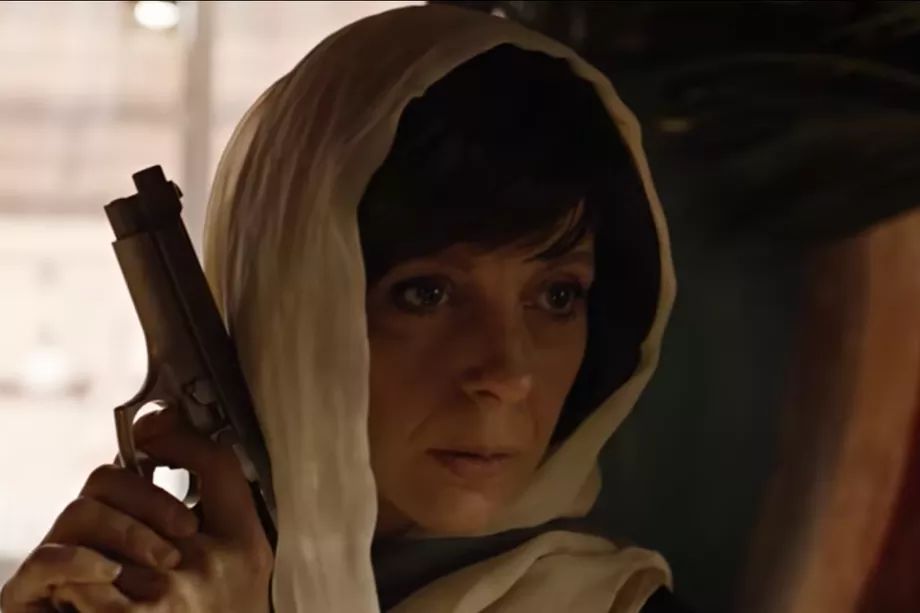
Mary, who was initially the only character whose storyline seemed totally independent of Sherlock’s, fully upset this pattern for a moment. Ultimately, however, the show gave her very little autonomy; in the final episode of season three, her entire mysterious and unrevealed history — which fans have spent the last three years debating — was framed as an insight into John’s character rather than Mary herself. We learned that she was a secretive former assassin, and that she lied her way into John’s life after stealing a new identity; but this entire story was framed as a story about John, not Mary — a story of how John was drawn to her because he was a reckless thrill-seeker.
The larger questions that season three raised about Mary — who or what she had been working for, what her new role would be now that her old career was known, and how the birth of a wee baby Watson would affect her and John’s relationship with Sherlock — were shelved until this season. Alas, Moffat does not have the world’s most excellent track record for giving women arcs with agency and satisfying plot resolutions, and it seems Mary is no exception to this pattern.
Who is Mary Morstan? Turns out, it doesn’t really matter.
誰是瑪麗·莫斯坦? 事實證明,這並不重要。
Although “The Six Thatchers” gave her plenty of chances to be badass, the episode revealed Mary’s entire assassin arc to be, not a foray into independence from Sherlock and his radius of dysfunction, but an enabling of it.
“The Six Thatchers” casts Mary as the victim of a routine revenge plot carried out by a former co-agent of hers from her days as a hired assassin. Through total coincidence, Sherlock is the one who figures out that someone is attempting to kill her, which prompts him to embark on a misguided attempt to protect her that ultimately results in her death. After identifying the shadowy government figure behind a plot to kill Mary and her fellow agents, Sherlock unnecessarily goads the suspect into taking a shot at him.
This moment is the inevitable result of three seasons’ worth of Sherlock’s hubris and refusal to heed warnings or take seriously the judgment of anyone besides himself; and when Mary just as inevitably jumps in front of him, sacrificing her own life for his, it should feel like a wake-up call and a moment of reckoning. Sherlock registers a glimmer of self-awareness that her death is his fault, but by this point, the show seems to be so far immersed in the cult of worship around its anti-hero that the scene is hardly more than an afterthought. By episode’s end, Mary herself — via posthumous “If you’re reading this, I’m dead” message sent to Sherlock via a video file — is giving Sherlock permission to insert himself right back into the center of John’s life, thus making her death all about his relationship with his best friend.
John, meanwhile, had cheated on Mary emotionally before her death; his grief sees him processing his obvious guilt as anger toward Sherlock for failing to protect her. Given all the terrible things Sherlock has done to John directly over the course of their friendship that John has inexplicably managed to forgive — including lying to John, drugging John, sending John into a PTSD-triggering war zone, and making John watch as Sherlock faked his death before pretending to be dead for two years — the fact that Sherlock’s failure to save Mary is the final straw that threatens to cause a permanent rift in John and Sherlock’s friendship does even more injustice to Mary’s narrative. Her story was never her own story; it was always and ever about fueling the heart of the series, the relationship between Sherlock and John.
2017年01月02日 18点01分 6
level 15
Lucy16♬ 楼主

At this point, does anyone even really care if Sherlock and John are in love?
在這樣的觀點下,是否有人甚至真的關心SHERLOCK和JOHN之間是否有在戀愛?
Much has been written about the way Sherlock queerbaits — that is, the way in which it arguably exploits queer identity by making John and Sherlock’s relationship into the ongoing subject of homoerotic speculation and subtext, even as the show’s creators insist, again and again, that they’re not writing the two men as queer.
Almost every episode of Sherlock up until now has contained some sort of side-speculation by one character or another that John and Sherlock are gay and/or in love. “The Six Thatchers” was notably devoid of this kind of interaction, and was in fact extremely straightforward about John and Sherlock’s friendship without any of the usual frustrating homoerotic overtones.
Except, of course, Mary is now dead, and she has charged Sherlock to “save” John after her death. This sets the stage for an even deeper level of intimacy forged by mutual grief over her loss. Before “The Six Thatchers,” we had queerbaiting in the form of a lot of gay jokes. Now the gay jokes may be gone, but the show has traded them for something that feels even more insulting: the death of its most independent female character purely to further some manpain that in the end probably won’t bring John and Sherlock together as more than friends.
It’s kind of a mess. And it really only justifies the impending narrative for the rest of season four — in which John will push Sherlock away as Sherlock awkwardly tries to help him recover — if you ultimately think their relationship is worth salvaging. Frankly I’m not sure that it is.
Sherlock, for all of his occasional attempts to be a decent friend, is a perpetually selfish individual who seems to need John more as a reflection of a certain version of himself than because he values who John is. John, in turn, appears to still be the PSTD-ridden soldier who can only snap out of his stupor when he’s chasing the adrenalin high of crime-solving that Sherlock offers him.
If this is friendship, it’s darkly co-dependent; if it’s true love, it’s a tragedy. Sherlock has never been forced to reckon with any of the utterly unconscionable things he’s done to John over the years (look back at that list — it’s a horrific list!). And if the show is going to sacrifice entire characters on the altar of “Johnlock,” a.k.a. the shipping name for their eternal love, it should probably make Johnlock something worth caring about. I'm just not sure that it has.
Also, though this may be an afterthought for a series that has built itself around its own cleverness, it’s just not very much fun anymore.
There are now two episodes left in season four, which Moffat and Gatiss have called “climactic” and have hinted may be the show’s last. But I’m not holding my breath for a narrative that boasts any finality, particularly since Sherlock still has a lot of loose threads to tie up. After all, we not only still don’t know what Moriarty’s end game was, we haven’t even met this season’s villain, Culverton Smith (Toby Jones). There may even be a third Holmes brother in the mix.
Still, at least Abbington and Mary got a fierce send-off. Whether it will be worth the loss in the long run depends on how willing Gatiss and Moffat are to really have Sherlock undergo the moral reckoning that would justify her death, or whether they intend to keep spinning out the same empty, self-satisfied love story of two crime-solving bros who would probably each be better off alone — or at least without the other.
Sherlock airs Sundays at 9 pm Eastern on PBS.
2017年01月02日 18点01分 7
没看懂这层PSTD是啥[委屈],查了urban dict,是pussy, stressed, tired 和 depressed?

2017年01月05日 02点01分
回复
770395858
:创伤后的应激反应
2017年01月08日 07点01分
2017年01月13日 05点01分
level 7
最低收視率!?
2017年01月02日 19点01分 8
是的,開播後有史以來最低
2017年01月02日 20点01分
@Lucy16♬ 感覺之後會更低,派刀子派太兇,粉絲用收視來反擊😂😂
2017年01月02日 20点01分
以前高智商取胜的风格,这集里面太弱化,还有打架的那段跟以前相比也是……但是能看到大叔气质的夏洛克,还是非常幸福啊[太开心]~所以还是要继续支持,这样才能看到本尼版的老年夏洛克啊~[乖]
2017年01月02日 23点01分
level 11
感觉这就是第三季风格大变的后遗症,尤其是加入玛丽这个戏份莫名多的角色后整个剧都失衡了,编剧玩出火了,希望能收一收,不要虎头蛇尾吧[乖]
2017年01月03日 02点01分 11
所以趕快吧瑪麗領便當是對的
2017年01月03日 03点01分
确实,玛丽的戏实在太多了让这部剧变味了,第一集便当必须的
2017年01月04日 06点01分
level 14
看完后,是觉得有些不如人意╮(╯▽╰)╭
节奏太快,缺乏前两季独有的美感
2017年01月03日 04点01分 12
个人觉得就不应该换前两季的保罗导演,出于什么原因都好,但是如果纯粹是为了转换风格的话,我个人认为这是一个失败的尝试,从301开始就觉得眼花撩乱了[汗]
2017年01月05日 02点01分
@valentine汀汀 嗯……当初惊艳和爱不释手的感觉没有了……越往后面越像千篇一律的犯罪电影
2017年01月05日 04点01分
@邀月酌 形容得真好!神夏的成功来自于导演、拍摄、剪辑、演员和剧本等各方面的完美创意结合,不得不说换导演导致的风格大变严重影响了此剧的效果,差不多等于撕掉了最有特色的标签,令人遗憾,即使我仍然追剧,但难免初心不再了[乖]
2017年01月05日 11点01分
回复 valentine汀汀 :是啊……现在等待,和看401的心情,没有当初激动到心动不已了……其实很大原因还是剧情本身的问题╮(╯▽╰)╭
2017年01月06日 13点01分
level 4
因为......神夏S4E1的开播时间......和期末考试十分完美的......重合了.....一w一
2017年01月03日 04点01分 13
這和妳是不是在考試無關,這是算英國當地的
2017年01月03日 04点01分
回复 juice1216 :顺便吐槽一下神夏在中国的开播时间OvO
2017年01月03日 04点01分
回复 柠檬薄荷草27 :本來就是這時間播出的,去年前年都是,你這吐槽太不有趣
2017年01月03日 04点01分
level 11
还没看,不过等了三年确实没那么兴奋了。。。
看评论都不想看了,怕失望。
2017年01月03日 10点01分 14
那就直接看402.403吧
2017年01月03日 10点01分
还是要看啊,三年后的夏洛克气场还是那么强大啊,很养眼哇!
2017年01月03日 14点01分
客观评价,四星是有的,仍然在一般意义的“好剧”水准之上。
2017年01月03日 15点01分
@truth0327 看后两集吧
2017年01月04日 09点01分
level 1
OMG
2017年01月03日 15点01分 15
level 9
不过高过女王致辞了,在新年季节目中排第二
2017年01月03日 15点01分 16
level 12
虽然依然很帅,但确实有那么点失望,玛丽的。。。有点随便。。。。。[汗]
2017年01月04日 08点01分 18
level 13
Mary出现以后节奏就不对劲了,就好像以前读小说,读到华生被Mary拐走的时候就立刻震惊了,怎么能这样?!柯南道尔为什么要这样做?!没了华生的福尔摩斯还能是福尔摩斯?有了老婆的华生还能是华生?晴天霹雳,说晴天霹雳一点都不过分,那时候互联网还是很新鲜陌生的事物,大家看小说都是买纸质书或者去图书馆借阅,没人剧透也没人能交流,看得我心塞得很...神夏这把火烧得正旺时把Mary引进来就是作死,
2017年01月05日 05点01分 19
现在做掉了Mary,但影响已经产生了,而且神夏提前步入小说后期,编辑们一直在讲说想要拍到老之类的话,但他们的意思大概是:各位,第四季结束之后我们就直接跳跃到老年医生和老年侦探的故事,所以几十年之后我们再见。
2017年01月05日 06点01分
不过欣慰的是神夏依旧火热,吐槽归吐槽,还是想继续追下去,还是希望他继续火下去
2017年01月05日 06点01分
同感!估计两编剧的心态和道尔一样,怕观众把福华看成一对,于是强行加入玛丽这个第三者,以排众议,唉[汗]
2017年01月05日 10点01分
@孤单小院 几十年后[泪]
2017年01月05日 15点01分
1 2 尾页