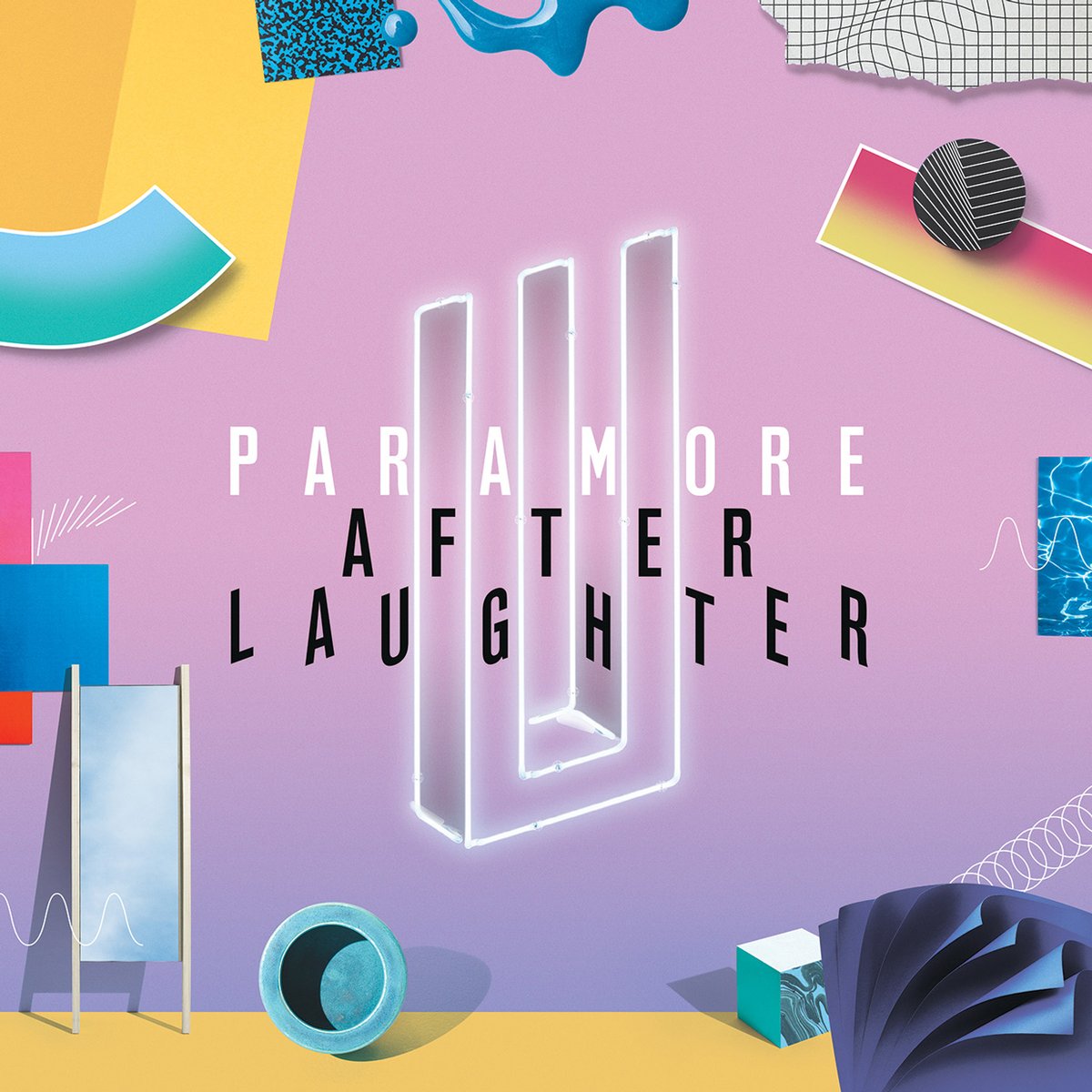
|Paramore|五专 After Laughter 乐评楼
paramore吧
全部回复
仅看楼主
level 11
Go2fan🌝 楼主
不负责任搬运&翻译 看我能坚持多久
这段时间刚好毕业论文和答辩,可能会断更哈哈哈
2017年05月11日 07点05分 1
level 11
Go2fan🌝 楼主
纽约时报 无评分
Paramore Tries to Find Itself in the ’80s on ‘After Laughter’
The last decade has been a hostile time for rock bands, which have lost their centrality to rappers, country stars, D.J.s, internet sensations and more. Even the most important rock bands of the daydon’t much sound like rock. That made the ascent of Paramore from the Warped Tour pop-punk trenches into the mainstream even more remarkable.
On its way to becoming one of the most influential bands of the 2000s, Paramore made the case for pop-punk at arena scale, and the band’s DNA — and especially that of its frontwoman, Hayley Williams, one of the most signature yelpers in mainstream rock — has been heard in musicians across the pop spectrum: Best Coast, Taylor Swift, Grimes, Hey Violet and beyond.
“After Laughter” is Paramore’s fifth album, but more important its first since its self titled 2013 album, the group’s least centered release and the one that all but completely did away with Paramore as it was, beginning with its 2005 debut album. That band was a taut pop-punk missile, and especially on its first two albums, it didn’t stray far from its mission.
On “After Laughter,” Paramore is single-minded again, but not of the same mind as it once was. Ms. Williams and her bandmates, Zac Farro and Taylor York have remade themselves into a 1980s pop-rock outfit: tinny digital percussion, synthesizers and mostly constrained, saccharine singing from Ms. Williams.
One of the shortcomings of mid-period Paramore was the way Ms. Williams was de-emphasized — she is best when allowed to emote largely uncamouflaged, and when her singing veers toward sneers.
Her vocals on this album are closer to that idea than on the last album, but even though her lyrics are as aggrieved as ever — maybe more so — the jubilation of the music works against it. This album suggests, in places, early-80s Blondie (“Rose-Colored Boy”) and the music of John Hughes films (“Forgiveness”), but also recent club-pop revivalists like La Roux and Kiesza (“Told You So”), or attitudinal pop stars like Charli XCX.
Ms. Williams isn’t as signature, or as effective, in this universe. She’s still a strong singer, especially on “Told You So,” but some of her essential grit is lost to the machines. She has impressive moments on the least varnished songs here, like “Tell Me How,” a gloomy and piercing piano ballad (“I can’t call you a stranger/But I can’t call you”). And sometimes she thrives despite musical chaos, like on “Idle Worship,” a sly song about who, and what, we value: “We all got problems don’t we?/We all need heroes don’t we?/But rest assured there’s not a single person here who’s worthy.”
With each album, Paramore became a little bolder and strayed a little further from its comfort ground. “After Laughter” feels like a break with that arc, and not a wholly explicable one. It is an odd choice to release a 1980s revival album just when a 1990s revival is moving to the center to pop culture (a movement this band would be well-suited to) and also to split so definitively with the pop-punk and emo of the band’s past just as those sounds are beginning to thrive again.
Instead, Paramore has removed itself from the narrative, making an album that mostly reveals how fatigued it was with its old idea of itself, and the conversations that came with it. Perhaps the least surprising thing about it is that one of the biggest rock bands of the 2000s isn’t much interested in being a rock band at all.
2017年05月11日 07点05分 2
大意:不够摇滚,不如之前的专辑大胆,新专80年代的氛围和现在主流流行乐里90年代复古的潮流不符。这支2000年代最伟大的摇滚乐队之一或许不再关心摇滚了。
2017年05月11日 07点05分
level 11
Go2fan🌝 楼主
插入个非乐评
Nylon杂志 无评分
Paramore Is Finally Back With Their New Album
'After Laughter' drops today
It’s been only 24 hours since the titles of what are presumed to be 12 songs from Paramore’s fifth album, After Laughter, were leaked online, but the band is facing a bigger mystery as we’re seated for lunch at Nashville’s Marsh House. It has to do with the waiter who just dropped off a plate of chili-oil-drizzled shrimp toast. Rumor has it—at least according to drummer Zac Farro, whose brother Jonathan is the restaurant’s pastry chef—the server in question owns a Buffy the Vampire Slayer jacket.
“Should we try by the end of lunch to get him to admit he likes Buffy?” asks Hayley Williams, Paramore’s once-flame-haired leader (she’s now ditched her iconic orange locks for an icy blonde). In overalls and a striped sweater, she’s also sporting a blue cap with the words “I want to be stereotyped, I want to be classified” written on the front in black thread. It’s a line from a Descendents song, and she’s been victim to both.
“I love it, but I guess it’s rude,” says Farro of Williams’s strategy, while getting updates from his brother via text. (Is the jacket airbrushed? A chain stitch of Sarah Michelle Gellar? Inquiring minds want to know.) Taylor York, Paramore’s guitarist and co-songwriter, and the co-producer of After Laughter alongside Justin Meldal-Johnsen, agrees. No one is going to bring up the jacket—after all, they do know how it feels to have personal information revealed to the public—but everyone has a pretty tough time keeping a straight face while placing their orders, shooting glances at each other like siblings playfully kicking each other underneath the dinner table.
The fact that these three are sitting here cracking jokes is almost a miracle, especially considering that Farro had left Paramore in 2010 at the same time as his brother, former guitarist Josh Farro, who published a scathing blog post about Williams’s intentions for the band as his not-so-sweet sayonara. Paramore’s turmoil didn’t start there: It’s been a roller-coaster ride with lineup drama since the band’s inception in 2004, when they were teenagers, with the most recent debacle being a lawsuit from ex-member Jeremy Davis over royalties. Often, friends who have known each other since childhood endure plenty of scuffles and arguments, and Paramore is no different. They just had to do so on a global stage.
“When we were back in Zac or Taylor’s bedroom, all we wanted to do was be there, and be tight,” recalls Williams. “That’s all we ever wanted for our band. But we just messed up a bunch. We did.” By the time Paramore started working on After Laughter, the band was a twosome: just Williams and York, writing together. On one hand, they liked the material that they were conjuring up—the lyrics were more vulnerable than ever and the songs dipped into new terrain sonically—but something felt off. They asked Farro to come by the studio to play drums on a few tracks, and it immediately became clear that he was the missing link. “The songs came alive,” says York, who proposed inviting Farro back into the band a few months after the visit. Williams instantly agreed: “No hesitation,” she says.
For Farro, the decision wasn’t quite as simple. After leaving the group, he lived in New Zealand for a while, and then returned to Nashville and started a band, Halfnoise. But in the end, he rejoined Paramore—partially to make music, but also to make amends with his oldest friends. “Our friendships are for life and that was the no-brainer,” Farro explains. “The new record is incredible, but it’s just music at the end of the day. We’ve gotten along better than ever.”
Though the band may now be sharing food and Buffy jokes, After Laughtercharts much of the pain that predates where Paramore is in this very moment. The lead single, “Hard Times,” says it all: It’s a new sound for the band, with complex and layered beats that are esoteric and exotic, and hints of ’80s new wave (Blondie and Talking Heads were references, and you can hear everything from Tune-Yards to David Bowie in there). It’s a song about wanting to hit rock bottom so you can finally rise again, and Williams sings like someone with nothing to lose. After all, Paramore’s always had a particular knack for making a sad tune burst with kinetic energy, in a way that makes confronting the uncomfortable somehow tolerable.
“I just felt like I was throwing up every two weeks,” Williams says about the songwriting process. “There was this poison I had to get out. There are a lot of depressed thoughts and dark, weird things. And some of it is humorous, because I had to laugh it off somehow.” They’re all laughing now, looking like a bunch of college kids taking a break after class as they dig into doughnuts. It wasn’t always this way, and they know just how fragile it is. Because what comes after laughter? For Williams, that moment when the giggles subside has always been the most captivating, she says. After laughter comes tears, as the expression goes, but for Paramore it’s a little different: After laughter comes the truth.
2017年05月11日 07点05分 3
level 14
或许不再关心摇滚了[泪]
2017年05月11日 08点05分 5
level 15
[小乖]这么快就要毕业了?
2017年05月11日 08点05分 6
[委屈]老了老了 好羡慕还可以上课的日子
2017年05月11日 08点05分
level 12
Allmusic的樂評出來了 四星
2017年05月12日 08点05分 7
level 11
Go2fan🌝 楼主
AllMusic 4/5
We know, we know, Paramore isn't just Hayley Williams. Paramore is a band. But when every roiling, addictive album is directly fueled by the discord of yet another lineup change, you start to wonder: Should the hole left by the most recently departing bandmate be considered an official member of the band?
It's a thought you can't help but mull over listening to Paramore's crackling fifth full-length album, 2017's After Laughter. The lineup this time features Williams, guitarist Taylor York (a member since their 2007 sophomore effort Riot!) and original drummer Zac Farro, returning after an estrangement since 2010. Notably not present here is bassist Jeremy Davis, who left for the second time in a huff of legal disturbances in 2015. The first time Davis left was immediately preceding the band's 2006 debut,All We Know Is Falling -- an album ultimately devoted to the struggle and strife of his departure (though he ultimately rejoined for Riot!). Paramore also famously came close to di**anding afterRiot!'s breakthrough success, with Farro and his brother, guitarist Josh Farro, disliking, apparently, the intense focus on Williams. That conflict directly informed 2010's Brand New Eyes, with the Farrobrothers leaving in a dust cloud of public smack-talk afterward. The sturm und drang of the Farros departure became the theme of the band's massively successful 2013 eponymous album, which found Williams, Davis, and York playing as a trio. But Davis eventually became unhappy with that record's royalty split and left the group to sue them. Which brings us to the "Never Say Die" theme ofAfter Laughter, an album that proves one thing above all else: Paramore thrive amid conflict.
Again working with producer Justin Meldal-Johnsen, Paramore churn out anthem after infectious anthem, each euphorically designed to grab you where it counts -- melodically and emotionally. Where 2013's Paramore found the group tentatively transitioning from their pop-punk roots toward a multi-layered '80s synth-pop sound, After Laughter reveals them having beautifully completed the transformation. Much credit here goes to York, who co-wrote all of the songs and whose deft guitar and keyboard make up much of the album's distinct aural character. But of course, Williams still beats at the center of everything, her voice providing the album's warm, exuberant core. Tracks like the lead-off disco-tinged "Hard Times" and crisply attenuated "Told You So" are earworms rife with DayGlo marimba and icy adult-contempo synths. Elsewhere, Williams weaves in the arpeggiated warmth ofthe Cure's "Friday I'm in Love," on "Grudges," and evinces Diva-era Annie Lennox on "Forgiveness.”
Despite the album's buoyantly pastel new wave tones, it unsurprisingly contains a truckload of hard-won maturity and a growing sense of battle fatigue. You hear it on virtually every track, particularly on the yearning closer "Tell Me How" ("I'm getting sick of the beginnings"). Ultimately, each Paramorealbum thus far has been more or less another triumphant battle cry of a band having fought and survived a breakup. But After Laughter intersects this with transcendence: the realization that life is an ongoing series of new beginnings.
2017年05月12日 13点05分 8
大意:新专辑快乐的氛围非常吸引人,从朋克转型到80年代合成器流行。专辑有难得的成熟度和日益增加的疲倦感(来自乐队成员更换的疲倦、对成人生活的疲倦)
2017年05月12日 13点05分
谢谢上边同学的提醒~
2017年05月12日 13点05分
level 11
Go2fan🌝 楼主
Newsday 评级A-
‘After Laughter’ review: Paramore delivers potential pop hits
The closer Paramore gets to breaking up, the better it gets at finding reasons to stick together. And the band’s latest album, “After Laughter” (Fueled by Ramen/Atlantic), proves it once again.
Following the success of 2013’s “Paramore” album, which hit No. 1 and landed them a Grammy for the smash “Ain’t It Fun,” bassist Jeremy Davis quit the band (and sued them), leaving only singer Hayley Williams and guitarist Taylor York, who both thought about giving up on Paramore and starting something over.
Instead, they started writing “After Laughter,” a collection of songs about remaining upbeat in the face of adversity that bounce around with the candy-colored energy of ’80s pop built on sleek synths and spiky, Afrobeat-tinged guitars, with drummer Zac Ferro returning to the fold.
Wiliams sounds giddy on the fizzy first single, “Hard Times,” a dissonance she explains in “Fake Happy,” which starts out as an acoustic dirge that transforms into an ambitious, funky anthem about everyone masking their sadness.
“After Laughter” is packed with potential pop hits that only Paramore could deliver. And that’s the perfect reason for the group to keep going.
2017年05月12日 13点05分 9
大意:专辑里全部都是只有Paramore能带来的潜在的大热流行单曲
2017年05月12日 13点05分
level 11
Go2fan🌝 楼主
英国卫报 4/5
Paramore: After Laughter review – bitter candy-coloured pop
Those watching from the periphery may regard Paramore’s move into pure pop as a natural extension of the mall punk and emo of formative albums. But for many, the group, who’ve endured a messy lineup change and subsequent legal disputes since their 2013 album, are in the midst of a rebirth. The grooves they always possessed are brought to the forefront on this peppy, vibrant record, a contrast to its lyrical themes, which cover masking misery (“I’m going to draw my lipstick wider than my mouth”), spiralling depression and the anxiety of ageing, only with a knowing wink. On Hard Times and Rose-Colored Boy, 80s pop production and highlife rhythms lead Hayley Williams’s powerhouse vocals to unexpectedly fun heights. After Laughter – candy-coated bitterness at its best – may steer them away from the Kerrang! crowd, but one thing remains consistent to Paramore’s emo roots – the theatrical mellifluence of internal angst.
2017年05月12日 13点05分 11
大意:专辑就像一颗苦味的流行硬糖,尽管伴奏很活泼,但歌词很痛苦。专辑远离了朋克,但在关于内心挣扎的歌词上依然保留着Emo的根。
2017年05月12日 13点05分
level 11
Go2fan🌝 楼主
英国NME 4/5
Paramore’s fifth album is a pop triumph – but there’s some serious sadness underneath all the bangers
Emo kids’ eyeliner will be even smudgier than normal this week, because on their fifth album Tennessee alt.rockers Paramore have finally fully ditched the serrated guitar-driven angst and the baggy trousered alt.awkwardness and taken a swan dive heart-first into a big, sunny swimming pool full of old school pop bangers.
Hayley Williams might have heavily hinted at the band’s new direction on 2013’s power-pop leaning ‘Paramore’ album, but ‘After Laughter’ comes over like the earnest, fist-pumping soundtrack to a long-lost John Hughes coming-of-age film. No longer is this a band to file alongside My Chemical Romance but rather the glossy likes of Haim, especially when the sassy handclaps and hairflicks of ‘Forgiveness’ kick in. The nods to their punk past are few and far between, coming through only ska-inflected bounce on ‘Caught In The Middle’, which brings to mind early No Doubt, and the moody, marauding ‘No Friend’, on which Hayley takes a time-out and lets one of the Parablokes holler grumpily.
But that’s certainly no bad thing – unless you’re really, really attached to 2006. With it’s perky marimba, album opener ‘Hard Times’ sets the scene perfectly; a synth-y, tropical offering that’s as cheery and comfortingly brash as a Hawaiian shirt worn out of season – it’s possible to hardly even notice that the lyrics are about being in a damn shitty mood (“Walking around with my little rain cloud / Hanging over my heard and it ain’t coming down”). ‘Told You So’ is similarly sprightly, but with an equally glum outlook (“For all I know / The best is over and the worst is yet to come”). More sonic therapy comes via the addictive ‘Grudges’, which feels like a turbocharged take on The Bangles, and bouncy ‘Pool’ while there’s whispers of classic rock heroines Heart in the dreamy power ballad ‘Forgiveness’ and string-laden ‘26’.
Catharsis is never usually this joyous, but sometimes smiling through the pain works better than crying.
2017年05月12日 13点05分 12
大意:精神发泄通常不会像这张专辑那么欢快,但有时候笑对痛苦比哭更好。
2017年05月12日 13点05分
level 11
Go2fan🌝 楼主
Empty Lighthouse Magazine 3.5/5
Review: Paramore Debuts A New A Sound With The Album 'After Laughter'
It has been four years since Paramore's self-titled album came out in 2013. The 2013 release featured a more indie-rock sound compared to their more punk-rock roots in earlier albums. The band took a four-year break and are now back with their new album called "After Laughter". It goes without saying that this new album has the most pop-rock sound compared to their previous efforts.
The most upbeat songs in Paramore's "After Laughter" are the first three tracks on the album. This includes the new singles of 'Hard Times' and 'Told You So'. Many fans will have heard of these songs before as the band released them on YouTube. These songs have a new wave '80s sound not too dissimilar to the tracks you may have heard in Grand Theft Auto: Vice City. These two songs are some of the best songs in the entire album.
The other '80s style pop song is 'Rose-Colored Boy'. Surprisingly, the rest of the album has a more softer rock sound. It's not quite the rock ballads we heard in the 2009 album "Brand New Eyes", but the rest of the album is far different to the first three tracks.
Overall though, this new album has more in common with their 2013 sound compared to their older albums. If you thought Paramore were going back to their old punk rocks roots, you might be disappointed because they are going all-in on their new musical style.
The new upbeat sound kind of shows how much Hayley Williams is looking forward to the future of the band. The past four years have not been easy on her with certain band members leaving the band. Luckily she has managed to convince a few of them to come back and they are now at a better stage in their lives.
Lyrically, I can tell that Hayley Williams is writing about the past four years of her own life. 'Grudges' has a line where she says "we can't keep holding onto grudges". This might be signaling her past band members and that they shouldn't feel bitter about the past. Other song titles that may elude to her past band members include the songs of 'Forgiveness' and 'Caught in the Middle'.
The album itself is kind of short only lasting around 42 minutes in total. There are 12 tracks in total with half the album being upbeat, while the rest of it are full of slower ballads. Hayley Williams sings in 11 songs though because the track 'No Friend' sounds more like an interlude.
In my opinion, 'No Friend' is easily the worst song in the entire album and I'm not sure why they bothered to put it in there. People on Reddit say it's Aaron Weiss from MewithoutYou singing in the background. In either case, this song sounds more like spoken poetry and you cannot really hear what Weiss has to say in it as his words are drowned out by the music.
In terms of my favorite tracks, 'Grudges', 'Caught in the Middle', 'Told You So, ' Pool' and 'Hard Times' are the standouts. If I had to pick one favorite song, it has to be 'Grudges' since the lyrics are meaningful and it reminded me a little bit of the old Paramore.
Anyway, "After Laughter" is a great effort from Paramore as the band aren't scared of experimenting with new sounds. This album has essences of the 2013 self-titled album plus small glimpses of "Brand New Eyes" too. Sadly, the punk rock Paramore sound is no longer alive though. Fans are still going to like this new album, but just skip 'No Friend' as that song is redundant...
2017年05月12日 13点05分 13
level 11
Go2fan🌝 楼主
Paste Magazine 8.7/10
Paramore are back with a vengeance, but with a bit more self-awareness. The Tennessee-based band announces that right off the bat on their fifth studio album with opener (and single) “Hard Times,” a synth-heavy acknowledgement that the now three-piece led, as ever, by Hayley Williams has been through a lot. And it’s something that the 28-year-old singer even states herself on “Rose-Colored Boy” (“I want you to stop insisting that I’m not a lost cause/’Cause I’ve been through a lot/Really all I’ve got is just to stay pissed off/If it’s all right by you”). But withAfter Weather, she and her bandmates prove that they aren’t going down without a fight.
With the band’s 2013 self-titled album, Williams and co. hinted at a more polished, pop ethos (sans grit) that set us up for this bubbly new LP. The result: an undeniably hooky record that strays from its grunge-rock roots and finds the band in a place where they’ve found the fun in their craft once again.
While the band has been no stranger to drama (with the Farro brothers departure seven years ago and a lawsuit from former bassist Jeremy Davis for royalties), After Weather reunites Williams and guitarist Taylor York, who has stuck with the band through thick and thin, with drummer Zac Farro. And with this reunion of sorts (which seems to be addressed in between the yelps on “Grudges”), fans will see what adult-emo looks like. For Paramore, they’ve found it in ‘80s new wave pop, while still managing to keep the aesthetic fans came to know and love 13 years ago, thanks primarily to Williams’ sharp, candy-coated lilt. Taking cues from feminist icons like Blondie and Cyndi Lauper and today’s pop phenoms like Grimes and Sky Ferreira, she makes it clear she’ll be doing things her way from now on, like, for example, pointing out more than once that she’s through being asked to smile.
Even if the lyrics still have a tinge of darkness, Williams still tries to look on the bright side (“For all I know/the worst is over/and the best is yet to come”). Her aspirational outlook shines throughout even on glimmering balladry when she’s struggling (“26,” “Pool”). And while the melodies do sound sincere, Williams’ attitude still lingers on as she nonchalantly uses the word “honey” on “Idle Worship”: a reference to her once-bitter outlook on “Misery Business” back when the band first made it big.
Once immersed in the pop-heavy album that is After Weather, it becomes clear that the less angsty outlook of Paramore is something only surface-level. If you look beneath, it shows Williams battling with herself to make amends (“Forgiveness,” “Caught In The Middle”) and put on a front to the public (“Fake Happy”). The Williams everyone loves is still there, but she’s become a little bit better at letting go. She’s not dwelling, so why should we? It’s time we matured with Paramore.
2017年05月12日 13点05分 14
level 5
目前几家的评价都蛮不错的[乖]
2017年05月12日 14点05分 15
level 12
這次Pitchfork應該也會首次評Paramore 只求不要太低分就好[委屈]
2017年05月12日 15点05分 16
叉婊最近不高冷了哈哈哈哈
2017年05月12日 15点05分
@Go2fan🌝 叉婊之前有評價過Hard Times和Told You So 還沒看不知道那兩首歌評價如何
2017年05月12日 16点05分
level 11
Go2fan🌝 楼主
美国滚石杂志 4/5
Review: Paramore's 'After Laughter' Triumphs Via Shiny Pop, Moody Lyrics
Paramore's giant hooks and soaring vocals have often been accompanied by a withering worldview – their rip-roaring breakthrough single "Misery Business" was a poison-pen letter to a romantic rival, while "Ain't It Fun," the Top Ten single from their 2013 self-titled album, blended the gospel-assisted bounce of "Like a Prayer" with a firm trust-no-one stance. The tension between sugar-spun pop hooks, the acrobatic soprano of lead singer Hayley Williams and an arm's-length take on the world has placed Paramore at the head of music's post-millennial class. They simmer on After Laughter, their first album since that 2013 offering and their reunion with drummer Zac Farro, whose acrimonious departure from the band in 2010 presaged their fuller turn from the rock world into pop.
What "pop" can be in 2017 is open to question, and on After Laughter Paramore thankfully decides to junk large chunks of the concept as it's currently practiced. ("I can't imagine getting up there and playing a Max Martin song – at that point we might as well just stop," guitarist Taylor York told The New York Times in April, shortly after the album was announced.) Instead, they embrace "pop" as a musical vibe, with a record that's so sunshine-bright it gives off a glare at times, rooted in fleet basslines and beats made for open-road drives and solo bedroom dance parties. The hooks are big and the detailing is sublime, at times borrowing from unexpected sources. York's highlife-inspired arpeggios add bursts of color to the manic "Told You So" and the freestyle-jam-in-disguise "Hard Times"; "Rose-Colored Boy" nicks its swinging synthpop from Scritti Politti's Cupid & Psyche 85 arsenal; "Pool" shimmers like a mirage on a blazing day, its countermelody recalling a Doppler-ed ice-cream truck's chime. The ballad "26" sighs into its lush strings, an older-and-wiser version of the twangy 2009 track "The Only Exception." "No Friend," the menacing second-to-last track that lets Williams off the hook on vocal duties and hands the mic to MeWithoutYou frontman Aaron Weiss before burying him in a cacophony of rumbling bass and frantic guitars, has a persistent lightness.
But while the surfaces of After Laughter might glint, Hayley Williams' lyrics evince a weariness that makes that brightness seem garishly empty. "All that I want/Is to wake up fine," she sings on the opening salvo "Hard Times," a track that also shouts out "My little rain cloud/Hanging over my head." Things don't get much sunnier from there – fake friends abound; "26" pivots on a vision of love that's assuming eventual doom; "Idle Worship" rides its titular homonym to comment on fame. Williams' voice is in gorgeous form, providing even more of a contrast to the stunning acridity of lyrics like "I'm gonna draw my lipstick wider than my mouth/And if the lights are low they'll never see me frown," from the gently rolling "Fake Happy."
After "No Friend," where Weiss shouts doom-and-gloom metaphors from beneath the band's noisy rubble, After Laughter comes down with "Tell Me How," a stutter-step ballad that allows Williams' voice to curl around and into expressions of anxiety that sound impossible to quiet. It's a fitting closer forAfter Laughter, a gorgeously produced, hook-studded record with cocked-eyebrow trepidation adding a jittery edge – a combination that's very of-the-moment in 2017, even if it veers outside of pop's rigid lines.
2017年05月12日 17点05分 17
1 2 尾页