S🐼thh
ymqgfs1221
关注数: 71
粉丝数: 22
发帖数: 947
关注贴吧数: 23
龙王鲸吧吧主竞选:NO.0001号候选人
始新世浅海物种(转发)
分享贴子 分享贴子
鲸鱼谷图片
埃氏宽椎鲸
龙王鲸吧吧主竞选:NO.0001号候选人
水一个楼吧 氵
转点图片。
Bone-Breaking Bite Force of Basilosaurus isis (转发) Abstract Bite marks suggest that the late Eocence archaeocete whale Basilosaurus isis (Birket Qarun Formation, Egypt) fed upon juveniles of the contemporary basilosaurid Dorudon atrox. Finite element analysis (FEA) of a nearly complete adult cranium of B. isis enables estimates of its bite force and tests the animal’s capabilities for crushing bone. Two loadcases reflect different biting scenarios: 1) an intitial closing phase, with all adductors active and a full condylar reaction force; and 2) a shearing phase, with the posterior temporalis active and minimized condylar force. The latter is considered probable when the jaws were nearly closed because the preserved jaws do not articulate as the molariform teeth come into occulusion. Reaction forces with all muscles active indicate that B. isis maintained relatively greater bite force anteriorly than seen in large crocodilians, and exerted a maximum bite force of at least 16,400 N at its upper P3. Under the shearing scenario with minimized condylar forces, tooth reaction forces could exceed 20,000 N despite lower magnitudes of muscle force. These bite forces at the teeth are consistent with bone indentations on Dorudon crania, reatract-and-shear hypotheses of Basilosaurus bite function, and seizure of prey by anterior teeth as proposed for other archaeocetes. The whale’s bite forces match those estimated for pliosaurus when skull lengths are equalized, suggesting similar tradeoffs of bite function and hydrodynamics. Reaction forces in B. isis were lower than maxima estimated for large crocodylians and carnivorous dinosaurs. However, comparison of force estimates from FEA and regression data indicate that B. isis exerted the largest bite forces yet estimated for any mammal, and greater force than expected from its skull width. Cephalic feeding biomechanics of Basilosaurus isis are thus consistent with habitual predation. Citation: Snively E, Fahlke JM, Welsh RC (2015) Bone-Breaking Bite Force of Basilosaurus isis (Mammalia, Cetacea) from the Late Eocene of Egypt Estimated by Finite Element Analysis. PLoS ONE 10(2): e0118380. http://tieba.baidu.com/mo/q/checkurl?url=https%3A%2F%2Fdoi.org%2F10.1371%2Fjournal.pone.0118380&urlrefer=c035c4810a3618167893b75ed8225e13 Academic Editor: Andrea B. Taylor, Duke University School of Medicine, UNITED STATES Received: July 22, 2014; Accepted: January 15, 2015; Published: February 25, 2015 Copyright: © 2015 Snively et al. This is an open access article distributed under the terms of the Creative Commons Attribution License, which permits unrestricted use, distribution, and reproduction in any medium, provided the original author and source are credited Data Availability: All relevant data can be found within the manuscript and Supporting Information files. Funding: Funding was provided by a Feodor Lynen Fellowship of the Alexander von Humboldt Foundation (JMF), Russ College, Ohio University, Athens (ES), and the College of Science and Health, University of Wisconsin–La Crosse (ES). The funders had no role in study design, data collection and analysis, decision to publish, or preparation of the manuscript. Competing interests: The authors have declared that no competing interests exist.
Unveiling the tale of Tutcetus, the pharaoh of whales A new paper, A diminutive new basilosaurid whale reveals the trajectory of the cetacean life histories during the Eocene, co-authored by Ph.D. student, Sanaa El-Sayed published in Communications BiologyLife reconstruction of the extinct basilosaurid whale Tutcetus rayanensis swimming in the Tethys Ocean of present-day Egypt, 41 million years ago. Illustration by Ahmed Morsi. Credit: Hesham Sallam - Mansoura University Vertebrate Paleontology Center An international team of scientists, led by Egyptian researchers, has made a groundbreaking discovery of a new species of extinct whale, Tutcetus rayanensis, that inhabited the ancient sea covering present-day Egypt around 41 million years ago. This new whale is the smallest basilosaurid whale known to date and one of the oldest records of that family from Africa. Despite its tiny size, Tutcetus has provided unprecedented insights into the life history, phylogeny, and paleobiogeography of early whales. Basilosauridae, a group of extinct fully aquatic whales, represents a crucial stage in whale evolution, as they transitioned from land to sea. They developed fish-like characteristics, such as a streamlined body, a strong tail, flippers, and a tail fin, and had the last hind limbs visible enough to be recognized as “legs”, which were not used for walking but possibly for mating. The newly discovered Tutcetus rayanensis was found in the middle Eocene rocks and unambiguously, it helps to illuminate the picture of early whale evolution in Africa. The new whale’s name draws inspiration from both Egyptian history and the location where the specimen was found. The genus name, Tutcetus, combines "Tut" – referring to the famous Egyptian Pharaoh Tutankhamun – and "cetus," Greek for whale, highlighting the specimen's small size and subadult status. The name also commemorates the discovery of the king's tomb a century ago and coincides with the impending opening of the Grand Egyptian Museum in Giza. The species name, rayanensis, refers to the Wadi El-Rayan Protected Area in Fayum where the holotype was found. Hesham Sallam, a Professor of Vertebrate Paleontology at the American University in Cairo, founder of Mansoura University Vertebrate Paleontology Center, and the leader of the project, commented that "Whales’ evolution from land-dwelling animals to beautiful marine creatures embodies the marvelous adventurous journey of life." He continued, “Tutcetus is a remarkable discovery that documents one of the first phases of the transition to a fully aquatic lifestyle that took place in that journey." The holotype specimen consists of a skull, jaws, hyoid bone, and the atlas vertebra of a small-sized subadult basilosaurid whale which is embedded in an intensively compacted limestone block. With an estimated length of 2.5 meters and a body mass of approximately 187 kilograms, Tutcetus is the smallest known basilosaurid to date. The team's findings have been published in Communications Biology, and the lead author, Mohammed Antar, from the Mansoura University Vertebrate Paleontology Center, and the National Focal Point for Natural Heritage stated, "Tutcetus significantly broadens the size range of basilosaurid whales and reveals considerable disparity among whales during the middle Eocene period." Antar added, “The investigation of the older layers in Fayum layers may reveal the existence of an older assemblage of early whale fossils, potentially influencing our current knowledge of the emergence and dispersal of whales."The Egyptian paleontologists Abdullah Gohar, Mohamed Sameh, and Hesham Sallam (from left) next to the holotype fossils of the newly identified basilosaurid whale, Tutcetus rayanensis, at Mansoura University Vertebrate Paleontology Center. Credit: Hesham Sallam - Mansoura University Vertebrate Paleontology Center Sanaa El-Sayed, a Ph.D. student at University of Michigan, a member of the Sallam Lab, and a co-author of the study stated, “The relatively small size of Tutcetus (188 kg) is either primitive retention or could be linked to the global warming event known as the 'Late Lutetian Thermal Maximum (LLTM).' El-Sayed further commented, “This groundbreaking discovery sheds light on the early evolution of whales and their transition to aquatic life." Through detailed analyses of Tutcetus's teeth and bones, using CT scanning, the team was able to reconstruct the growth and development pattern of this species, providing an unparalleled understanding of the life history of early whales. The rapid dental development and small size of Tutcetus suggest a precocial lifestyle with a fast pace of life history for early whales. Additionally, the discovery of Tutcetus contributes to the understanding of the basilosaurids' early success in the aquatic environment, their capacity to outcompete amphibious stem whales, and their ability to opportunistically adapt to new niches after severing their ties to the land. The team's findings suggest that this transition likely occurred in the (sub)tropics. Abdullah Gohar, a Ph.D. student at Mansoura University, a member of Sallam Lab, and a co-author of the study stated that “Modern whales migrate to warmer, shallow waters for breeding and reproduction, mirroring the conditions found in Egypt 41 million years ago. This supports the idea that what is known as now Fayum was a crucial breeding area for ancient whales, possibly attracting them from various locations and, in turn, drawing in larger predatory whales like Basilosaurus." The team's findings have significant paleobiogeographic implications, demonstrating that basilosaurids likely achieved a rapid spread over the Southern Hemisphere, reaching high latitudes by the middle Eocene. Erik Seiffert, Chair and Professor of Integrative Anatomical Sciences at the University of Southern California and a co-author of the study, remarked, "The Eocene fossil sites of Egypt’s Western Desert have long been the world’s most important for understanding the early evolution of whales and their transition to a fully aquatic existence." adding, “The discovery of Tutcetus demonstrates that this region still has so much more to tell us about the fascinating story of whale evolution."
转发图片,一个建模,侵权马上删
A diminutive new basilosaurid whale reveals the trajectory of the cetacean life histories during the Eocene Mohammed S. Antar, Abdullah S. Gohar, Heba El-Desouky, Erik R. Seiffert, Sanaa El-Sayed, Alexander G. Claxton & Hesham M. Sallam Communications Biology volume 6, Article number: 707 (2023) Cite this article 11k Accesses 1 Citations 1829 Altmetric Metricsdetails Abstract Soon after whales originated from small terrestrial artiodactyl ancestors, basal stem forms (archaeocetes) came to inhabit more specialized aquatic ecologies and underwent a tremendous adaptive radiation that culminated in the adoption of a fully aquatic lifestyle. This adaptive strategy is first documented by the geographically widespread extinct family Basilosauridae. Here we report a new basilosaurid genus and species, Tutcetus rayanensis, from the middle Eocene of Fayum, Egypt. This new whale is not only the smallest known basilosaurid, but it is also one of the oldest records of this family from Africa. Tutcetus allows us to further test hypotheses regarding basilosaurids’ early success in the aquatic ecosystem, which lasted into the latest Eocene, and their ability to outcompete amphibious stem whales and opportunistically adapt to new niches after they completely severed their ties to the land. Tutcetus also significantly expands the size range of the basilosaurids and reveals new details about their life histories, phylogeny, and paleobiogeography. Similar content being viewed by othersAbrupt onset of intensive human occupation 44,000 years ago on the threshold of SahulArticle Open access22 May 2024Directed conservation of the world’s reef sharks and raysArticle 20 May 2024Long term declines in the functional diversity of sharks in the coastal oceans of eastern AustraliaArticle Open access21 May 2024Introduction Soon after whales originated in the late early Eocene from small quadrupedal terrestrial artiodactyl ancestors in south Asia1,2,3, semi-aquatic archaeocete whales rapidly dispersed westward to North Africa4,5, West Africa6, North America7,8, and South America9 during the early middle Eocene. As the late Eocene (Priabonian) progressed, the fully aquatic basilosaurid archaeocetes had replaced amphibious archaeocetes10 and were the most abundant whales and ultimately extended into the geographic ranges occupied by modern cetaceans11. Basilosauridae was the first family of archaeocete whales known to science12. Basilosaurids were cosmopolitan, anatomically derived, and fully aquatic archaeocete whales that are thought to be close to the ancestry of extant (or crown) cetaceans10,13. Basilosaurids are characterized by the loss of the maxillary third molar, modification of their forelimbs into flippers, a substantially reduced innominate which lacks any bony connection to the vertebral column, an increased number of posterior thoracic/lumbar vertebrae, and the development of paddle-like tails14. They range in size from around 4m for Saghacetus osiris (Priabonian) to around 18m for Basilosaurus cetoides (Bartonian to early Priabonian)10,11,14. Basilosaurids are the best known archaeocetes of the African Paleogene15. Not only were the vast majority of their fossil remains discovered in Egypt14,15,16, but the most thoroughly documented basilosaurids, including the first fully aquatic cetaceans and early tail-powered swimming cetaceans, were discovered in Egypt’s Fayum Depression, which is home to the Wadi El-Hitan World Heritage Site, one of the world’s most productive fossil whale sites17. The German naturalist Georg Schweinfurth discovered the first fossil cetaceans from the eastern hemisphere (and indeed the entire African continent) in Egypt in 187918. These fossils included a variety of isolated vertebrae of archaeocete whales from the Birket Qarun Formation on the Geziret El Qarn island of Qarun Lake in the Fayum Depression, Egypt19. Since then, the richness of cetacean fossils in the African (mainly Egypt) fossil record has substantially shaped our understanding of early whale evolution14,15,16,17. This has led to a greater understanding of the diversity, anatomy, behavior, and adaptations of archaeocete whales4,5. Here, we report on a new basilosaurid whale, Tutcetus rayanensis, gen. et sp. nov., from the middle Eocene (early Bartonian) Sath El-Hadid Formation of the Fayum Depression, Egypt. The holotype specimen, Mansoura University Vertebrate Paleontology Center (MUVP) 501, is an incomplete skull with mandibles, the hyoid apparatus, and the atlas vertebra of a small-sized subadult basilosaurid whale in an indurated limestone block. The new whale is the smallest basilosaurid known to date and is estimated to have been around 2.5m in length and about 187kg in body mass. It is not only the smallest basilosaurid whale yet discovered, but it is also one of the oldest records worldwide. This intriguing specimen markedly expands the size range of the basilosaurids and demonstrates that whales achieved considerable disparity during the middle Eocene.
A 3D model of a Basilosaurus isis skull, showing points of stress during a bite. From Snively et al., 2015. SCIENCE LAELAPS Basilosaurus the Bone-CrusherByRiley BlackMarch 06, 2015•4 min read Bite force is all the rage lately. This year alone paleontologists have published new bite force estimates for the largest rodent of all time and a prehistoric crocodylian heavyweight. And in the pages of PLOS ONE, Eric Snively, Julia Fahlke, and Robert Welsh have brought another superlative chomper to attention – the early whale Basilosaurus. The inspiration for the study came from damaged bones. In 2012 Fahlke published a paper on a set of busted whale skulls from the 38-36 million year old strata of Egypt. Each of the four were from juveniles of a whale called Dorudon – a sinuous, fully-aquatic whale that still had differentiated teeth for gripping and shearing – and they all bore bite marks that matched the size and spacing of teeth belonging to the similar, but much larger, Basilosaurus. The bigger whales were grabbing the young Dorudon by the skulls, sometimes repositioning their prey before a final crunch. The ancient toothmarks offered compelling evidence that, much like today’s orcas, Basilosaurus was a whale that ate other whales. But as a check on its biting power, Snively, Fahlke, and Welsh turned to an engineering technique called finite element analysis to run Basilosaurus through some virtual chomping. Working from a skull belonging to a beautifully-complete specimen of Basilosaurus isis found in Egypt, the researchers found that the whale could bite with a force of over 3,600 pounds at the position of its upper third premolar. As suggested by Fahlke, this was the part of the mouth Basilosaurus used to crack open little Dorudon skulls and the estimated force is more than sufficient to penetrate through skin, muscle, and bone. And while the figure is undoubtedly influenced by the size of Basilosaurus, as Andy Farke points out, this is still the highest bite force yet estimated for a mammal.A simulated Basilosaurus bite on a Dorudon skull. From Fahlke, 2012. Basilosaurus didn’t go right for a killing stroke, though. Some of the Dorudon skulls hint at initial capture with the conical, canine-like teeth at the front of the jaw first, and the researchers found that Basilosaurus could grip victims with over 2,300 pounds of force. With prey in place, Basilosaurus could then toss it back further along the jaw for a deadly shear bite. Crocodylians sometimes do the same with turtles and other hard-shelled prey, nabbing them with pointed teeth before obliterating their victims’ defenses with a back-tooth bite. All that biting power allowed Basilosaurus to effectively dismantle large prey. The skulls of dead Dorudon and Basilosaurus teeth worn from scraping against bone attest to that grisly fact. And as Snively, Fahlke, and Welsh note, that Basilosaurus was capable of such shattering bites also fits with the picture of the whale as a consummate hunter. The highest bite forces known – whether recorded from live animals or estimated from bones – belong to active predators, including carnivores like saltwater crocodiles, spotted hyenas, great white sharks, and Tyrannosaurus. Sure, powerful bites might let them take advantage of carrion from time to time, but the ability to deliver devastating chomps is also a critical skill for predators who must quickly disable their victims. What was true for spotted hyenas was likely true for Basilosaurus, making the ancient mammal one of the most frightening whales of all time.
龙王鲸吧吧主竞选:NO.0001号候选人
秘鲁鲸的宝可梦版本 可以想想种族值属性啥的了
重新开始转的东西
转发一下化石网的老内容 埃及发现“死神鲸”化石——4千3百万年前水陆两栖的鲸鱼祖先 鲸鱼不是鱼,而是哺乳动物,是从陆生的哺乳动物演化而来,化石材料提供了重要证据:在4千万年之前的约千万年间,鲸鱼的祖先从食草似鹿的陆生哺乳动物,逐渐演化成为水生的鲸类,其中生活在始新世的水陆两栖原鲸类鲸鱼不是鱼,而是哺乳动物,是从陆生的哺乳动物演化而来,化石材料提供了重要证据:在4千万年之前的约千万年间,鲸鱼的祖先从食草似鹿的陆生哺乳动物,逐渐演化成为水生的鲸类,其中生活在始新世的水陆两栖原鲸类是这个演化转变链条上的最重要环节。近期,埃及曼苏尔大学的科学家研究报道了一种新的原始鲸类化石,其为半水生生活,既能在陆地上行走,又能在水中游泳,这些化石对于研究鲸类的早期演化及地理展布提供了重要材料。 生活在4千3百万年前的水陆两栖“死神”鲸(图来自网络,版权R.W. Boessenecker) 新发现的化石采自埃及法尤姆凹陷的始新世地层,化石材料主要是头骨,肋骨及脊椎骨,尤其是它的头颅与埃及豺头人身的死神(Anubis)的头非常相似,因此被命名为Phiomicetus anubis (死神法姆尤鲸)【属名中Phiom为古埃及科普特语的法尤姆(Fayum),即化石产地;希腊语cetus-鲸】。通过分析化石遗骸,确认它是非洲发现的最早且最原始的原鲸类化石。死神鲸体长约3米,体重约600公斤,生活在4千3百万年前,水陆两栖,强壮的颌肌使得它们能够较为容易地咬住猎物,比如鳄鱼和小哺乳动物等,是当时海滩附件的最为成功的猎食者,对于许多动物(包括其它幼年鲸)而言,它们真的是死神一样恐怖! Phiomicetus anubis (新属新种)的正模标本,头骨侧视(a)、背视(b);颌骨及牙齿(c、d、e);脊椎骨(f、g);肋骨(h,i)。比例尺= 5 cm. (图片来源Gohar et al., 2021) 虽然现生的鲸类动物都生活在水中,但它们的祖先5千万年前生活在陆地,之后才逐渐从陆生动物演化到海洋动物。目前,最老的鲸类化石可能是来自巴基斯坦5千万年前地层,即Pakicetus attocki,它体型大小与狼差不多。无疑,新发现的水陆两栖的死神鲸可为研究鲸类的演化提供实证材料,尤其是它来自于非洲大陆,可为探索鲸类何时从印度—巴基斯坦海洋区向全球扩散提供材料。 上述研究成果于8月25日已在线刊登在国际著名科学期刊《Proceedings of the Royal Society B: Biological Sciences》. (南谷,中国科学院南京地质古生物研究所)
分享贴子
讲个笑话各位 龙王鲸打不过普鳄
转发化石网内容 巨齿鲨或长逾20米 几口就能吞下杀人鲸 (化石网整理)据东网:活在1,100万年前的海洋生物巨齿鲨,多年来只有牙齿和脊椎化石传世,故学界一直无法得知其真正大小。英国一批科学家最近根据巨齿鲨仅存的化石资料,重建电脑3D模型,竟估计这种史前海中巨兽的真身长逾20米,就算长达8米的杀人鲸,它也只需几口便能吃下,打破了学界以为它只长10至18米的推测。 古生物学家皮米恩托(Catalina Pimiento)教授与解剖学家哈钦森(John Hutchinson)以现存于比利时皇家科学研究所的一截脊椎化石数值,再加上牙齿化石和它们的近亲大白鲨的全身扫描数据,还原出一只身长16米、重67公吨的怪物。由于世界现存最大的巨齿鲨脊椎化石,比他们今次所用的这块还大50%,所以巨齿鲨的体形可以比现代的座头鲸还要大。 皮米恩托表示,如3D模型资料正确,巨齿鲨游速可达每小时4.8公里,比现代最快的太平洋鼠鲨的3.2公里快得多。由于其惊人体形需要巨大能量,所以巨齿鲨或需猎食像鲸鱼这类高卡路里的猎物维生。因为气候变化和大型猎物减少,巨齿鲨在生存竞争上不及大白鲨,从而在300万年前消失。
转发一下图
转发化石网的一篇文章 1.64亿年前侏罗纪头足类生物罗讷河陷阱幽灵蛸以强有力的吸盘捕猎 2022-06-25 14:45:11 来源:化石网 1301 64亿年前侏罗纪头足类生物罗讷河陷阱幽灵蛸以强有力的吸盘捕猎(图片:P Loubry)(化石网整理)据中新网北京6月24日电(记者 孙自法):施普林格·自然旗下开放获取学术期刊《科学报告》最新发表一篇古生物学1.64亿年前侏罗纪头足类生物罗讷河陷阱幽灵蛸以强有力的吸盘捕猎(图片:P.Loubry) (化石网整理)据中新网北京6月24日电(记者 孙自法):施普林格·自然旗下开放获取学术期刊《科学报告》最新发表一篇古生物学论文,研究人员对一种古代头足类物种——约1.64亿年前罗讷河陷阱幽灵蛸化石标本进行分析和研究发现,这种与章鱼、鱿鱼、墨鱼有亲缘关系的古代动物可能良好适应了在开放海洋中主动捕猎的生活方式。 该研究论文揭示,这一物种可能拥有能抓住猎物的强有力吸盘,而不像其生活在现代的后代幽灵蛸那样以漂浮的有机物为食。 罗讷河陷阱幽灵蛸被认为是现代幽灵蛸最古老的亲属之一,后者生活在远离海岸的极端深海环境中,那里通常缺少氧气。然而关于罗讷河陷阱幽灵蛸的生理特征此前所知甚少,因为它身体大多为软组织,极少能发现化石化的躯体。 论文通讯作者、法国索邦大学国家自然历史博物馆和法国国家科学研究院巴黎研究中心艾莉森·罗韦(Alison J. Rowe)和同事合作,使用非破坏性三维成像技术重新分析了罗讷河畔拉武尔特(位于法国阿尔代什)发现的罗讷河陷阱幽灵蛸化石,该化石可追溯至1.64亿年前。这一八足动物化石标本很小,长约10厘米,长着修长的椭圆形身体,有两个小鳍。 与现代幽灵蛸类似,罗讷河陷阱幽灵蛸的吸盘可能也没有齿。但和幽灵蛸不同的是,这一化石标本显示出存在强有力吸盘的证据,位于两个特化长背腕的顶端。 论文作者基于相近现代物种提出,罗讷河陷阱幽灵蛸使用这些吸盘制造出水密性的密封,产生牢靠吸力。他们认为,这些吸盘或许还能帮助操纵和保留猎物。 论文作者提出,双腕存在肌肉吸盘和用于侦测猎物的锥状感觉附属物,说明罗讷河陷阱幽灵蛸是一种主动捕食者。这和它机会主义的后代幽灵蛸不同,后者适应了低能量的深海生活方式。 相关报道:古代幽灵蛸靠吸盘“捕猎” (化石网整理)据中国科学报(冯维维):科学家对罗讷河“陷阱幽灵蛸”化石标本的分析表明,这是一种古代头足类物种,与章鱼、鱿鱼、墨鱼有亲缘关系。研究发现这种动物可能良好适应了在开放海洋中主动捕猎的生活方式,揭示这一物种可能拥有能抓住猎物的吸盘,而不像其生活在现代的后代幽灵蛸那样以漂浮的有机物为食。相关研究6月23日发表于《科学报告》。 罗讷河陷阱幽灵蛸被认为是现代幽灵蛸最古老的亲属之一,后者生活在远离海岸的极端深海环境中,那里通常缺少氧气。然而关于罗讷河陷阱幽灵蛸的生理特征我们所知甚少,因为它身体大多为软组织,极少能发现化石化的躯体。 法索邦大学国家自然历史博物馆、法国国家科学研究院巴黎研究中心研究员Alison Rowe和同事使用非破坏性三维成像技术重新分析了罗讷河畔拉武尔特(位于法国阿尔代什)发现的罗讷河陷阱幽灵蛸化石,该化石可追溯至1.64亿年前。这一八足标本很小,长约10厘米,长着修长的椭圆形身体,有两个小鳍。 与现代幽灵蛸类似,罗讷河陷阱幽灵蛸的吸盘可能也没有齿。但和幽灵蛸不同的是,这一化石标本显示出存在强有力吸盘的证据,位于两个特化长背腕的顶端。 作者基于相近现代物种提出,罗讷河陷阱幽灵蛸使用这些吸盘制造出水密性的密封,产生牢靠吸力。作者认为,这些吸盘或许还能帮助操纵和保留猎物。 作者提出,双腕存在肌肉吸盘和用于侦测猎物的锥状感觉附属物,说明罗讷河陷阱幽灵蛸是一种主动捕食者。这和它机会主义的后代幽灵蛸不同,后者适应了低能量的深海生活方式。 相关论文信息:http://tieba.baidu.com/mo/q/checkurl?url=https%3A%2F%2Fdoi.org%2F10.1038%2Fs41598-022-12269-3&urlrefer=984e0f99c6cdd5be4d4a194af8170b09
转自化石网(巨齿鲨牙应该很有价值) 英国萨福克郡6岁男童海边捡贝壳意外发现史前巨齿鲨牙齿化石 2022-05-15 13:58:55 来源:化石网 评论:0 点击:110英国萨福克郡6岁男童海边捡贝壳意外发现史前巨齿鲨牙齿化石(化石网整理)据东网:英国一对父子早前到萨福克郡一个海滩捡贝壳时,意外发现一颗属于史前巨齿鲨的牙齿化石,可能有多达2,000万年历史。6岁男童谢尔顿英国萨福克郡6岁男童海边捡贝壳意外发现史前巨齿鲨牙齿化石 (化石网整理)据东网:英国一对父子早前到萨福克郡一个海滩捡贝壳时,意外发现一颗属于史前巨齿鲨的牙齿化石,可能有多达2,000万年历史。 6岁男童谢尔顿(Shelton)与父亲一起发现这颗10厘米长的牙齿化石,并经东昂格利亚大学的进化生物学家确认,属于史前巨齿鲨。专家更指巨齿鲨牙齿化石在英国海岸附近不常见更大赞该化石保存得非常好。 谢尔顿的父亲透露,儿子非常喜欢该化石,除了每晚放在床边陪同入睡,更带回学校分享,并获颁当地探险家徽章。巨齿鲨生活在2,000万年前,约在300万年前灭绝,曾统治南极洲以外的所有海洋,估计长18米,重60吨。
龙王鲸吧吧主竞选:NO.0001号候选人
分享贴子
转发化石网的一些图片
转发面条鲸在牙齿方面的研究
发点图嘿嘿
分享贴子
嘿嘿,来咯 发点图以示庆祝
转自化石网的一篇文章 冰河时代“巨人”斯特拉海牛的基因组解码 2022-02-15 10:37:12 来源:化石网 评论:0 点击:60冰河时代巨人斯特拉海牛的基因组解码(化石网整理)据cnBeta:冰河时代的巨型海牛(又名巨儒艮或斯特拉海牛)于1741年被Georg Wilhelm Steller 发现,后来以他的名字命名。这位18世纪的自然学家不仅对这种动物冰河时代“巨人”斯特拉海牛的基因组解码 (化石网整理)据cnBeta:冰河时代的巨型海牛(又名巨儒艮或斯特拉海牛)于1741年被Georg Wilhelm Steller 发现,后来以他的名字命名。这位18世纪的自然学家不仅对这种动物物种的巨大体型感兴趣,而且对其不寻常的、像树皮一样的皮肤也感兴趣。他将其描述为“皮肤如此之厚,以至于它更像老橡树的树皮,而不是动物的皮肤”。 这种树皮状的表皮结构在相关的海牛目中是没有的,它们今天只生活在热带水域。在科学界,以前认为树皮状的表皮是寄生虫摄取的结果,但也能隔绝热量,从而很好地保护海牛在冰河时期免受寒冷的影响,在极地海洋中免受伤害。 在目前的研究中,由莱比锡大学的Diana Le Duc博士和Torsten Schöneberg教授、波茨坦大学的Michael Hofreiter教授和加利福尼亚大学的Beth Shapiro教授领导的科学家们表明,斯特拉海牛的古基因组显示了功能性的变化。这些变化是造成树皮状皮肤和适应寒冷的原因。 为了发现这一点,一个来自德国和美国的国际研究小组从总共12个不同个体的骨骼化石中重建了这个已灭绝物种的基因组。莱比锡大学医院人类遗传学研究所的Diana Le Duc说:“我们调查的最引人注目的结果是,我们已经澄清了为什么这个海洋‘巨人’拥有树皮般的皮肤。”科学家们发现海牛基因组中的一些基因失活,这些基因是表皮最外层的正常结构所必需的。这些基因在人类皮肤中也有作用。 这些所谓的脂质氧合酶基因的遗传性缺陷导致了人类所谓的鱼鳞病。来自鲁道夫-舍恩海默生物化学研究所的Schöneberg说:“其特点是皮肤表层增厚和变硬,有大块鳞片,有时也被称为‘鱼鳞病’。因此,我们的研究结果也使我们对这种临床情况的看法更加清晰,”这位生物化学家解释说。“这里可能是新的治疗方法的关键所在。” 科学家们通过将基因组与最近的近亲--儒艮的基因组进行比较,准确地指出了这种基因缺陷。研究人员的调查得到了莱比锡马克斯-普朗克进化人类学研究所的支持,该研究所在分析古代DNA方面贡献了其生物信息学专业知识。结果,他们发现了可能有助于适应凉爽的北太平洋栖息地的遗传变化的重要证据。 波茨坦大学的Hofreiter说:“这是一个令人印象深刻的例子,说明基因缺陷不仅可以导致疾病,还可以根据栖息地的不同而具有优势。”此外,基因组数据显示了人口规模的急剧减少。这在该物种被发现前的50万年就开始了,可能导致了它的灭绝。Hofreiter对此总结如下:“通过今天的分子遗传学澄清,我们的研究结束了18世纪初一位德国博物学家的精确观察。”
体型对比(虎鲸,龙王鲸,霍夫曼沧龙,克柔龙)
分享贴子
分享贴子
分享贴子
分享贴子
巨型龙王鲸化石
分享贴子
被鼬鲨啃过的儒艮 惨
分享贴子
分享贴子
顺便说一下,新视频已在B站发布
祝各位新年快乐呀!(2022年水楼加节日祝贺楼
有意的可以进一下吧群哈
分享贴子
分享贴子
分享贴子
分享贴子
最近又遇到个找事的 这人就是为了黑别人所以对我们说的话不加思考的黑,还说出过巨齿鲨体型肯定会下降的言论(他怕是不知道近几年巨齿鲨体型上涨了还有一些图就不发了,最近真是被无语到了,事先声明是他主动来人身攻击的,这不得经典永流传一下)
我问到的关于波塞冬耳齿鲨的一些资料,波塞冬耳齿鲨和龙王鲸是一 我问到的关于波塞冬耳齿鲨的一些资料,波塞冬耳齿鲨和龙王鲸是一个时期的,主要生活在远洋,与龙王鲸冲突很少,但龙王鲸遇到波塞冬耳齿鲨会很危险
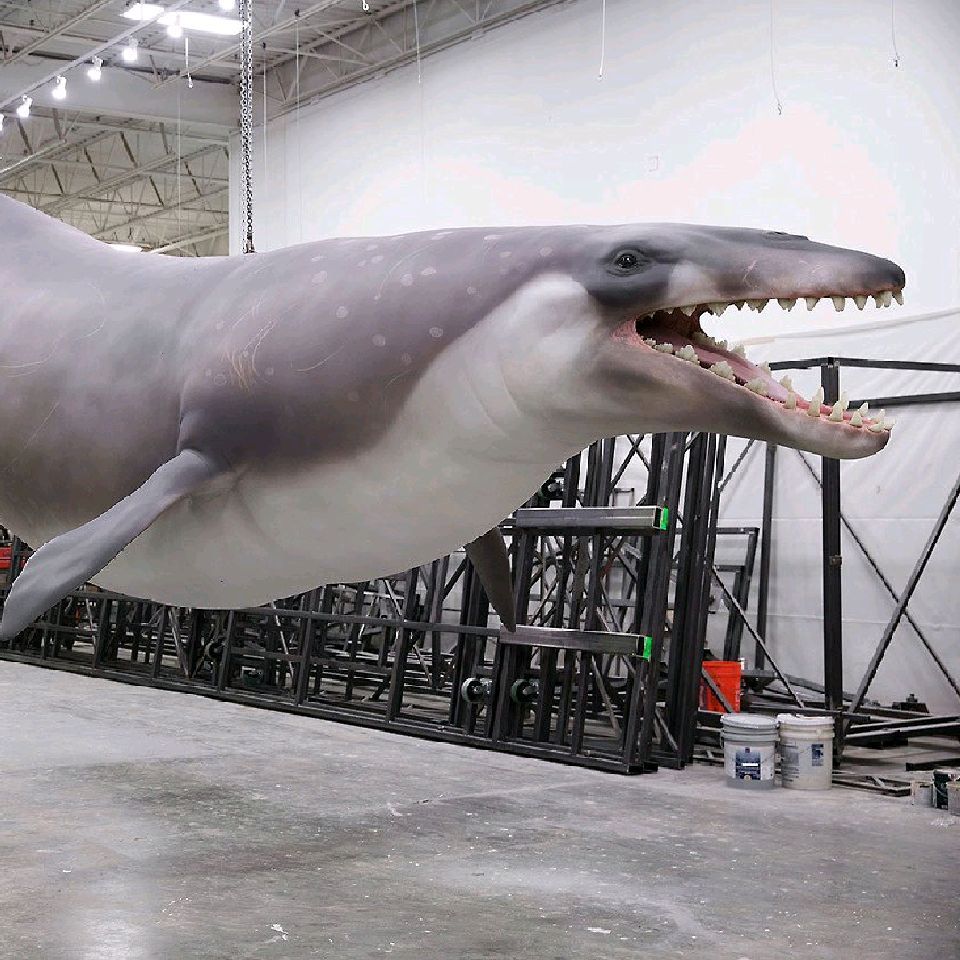
BBC版龙王鲸
龙王鲸吧吧主竞选:NO.0001号候选人
再发点图
转自恐龙吧 转自恐龙吧
各位大佬有没有角鼻龙的复原图呀,就是美图,骨骼图也要一点 手动(doge)
这个吧还有人吗?
龙王鲸未定种 现在还有龙王鲸未定种的最新消息吗?我只有20-21米,24-25吨的体型
这个人说我在贴吧里会被骂惨 我在抖音发个投票钓鱼被说称虎吹,发个喜鱼与巨齿鲨斗兽说成新西兰大鱼龙与大牙斗兽(出自这人之口),想问一下,南巨是理论上限14吧,两个个体一个12米多,一个13米多
沧龙的速度怎么样,谁能告诉我一下哈
第五集里那个两栖动物到底叫啥名字啊 第五集里那个两栖动物到底叫啥名字啊
1
下一页